
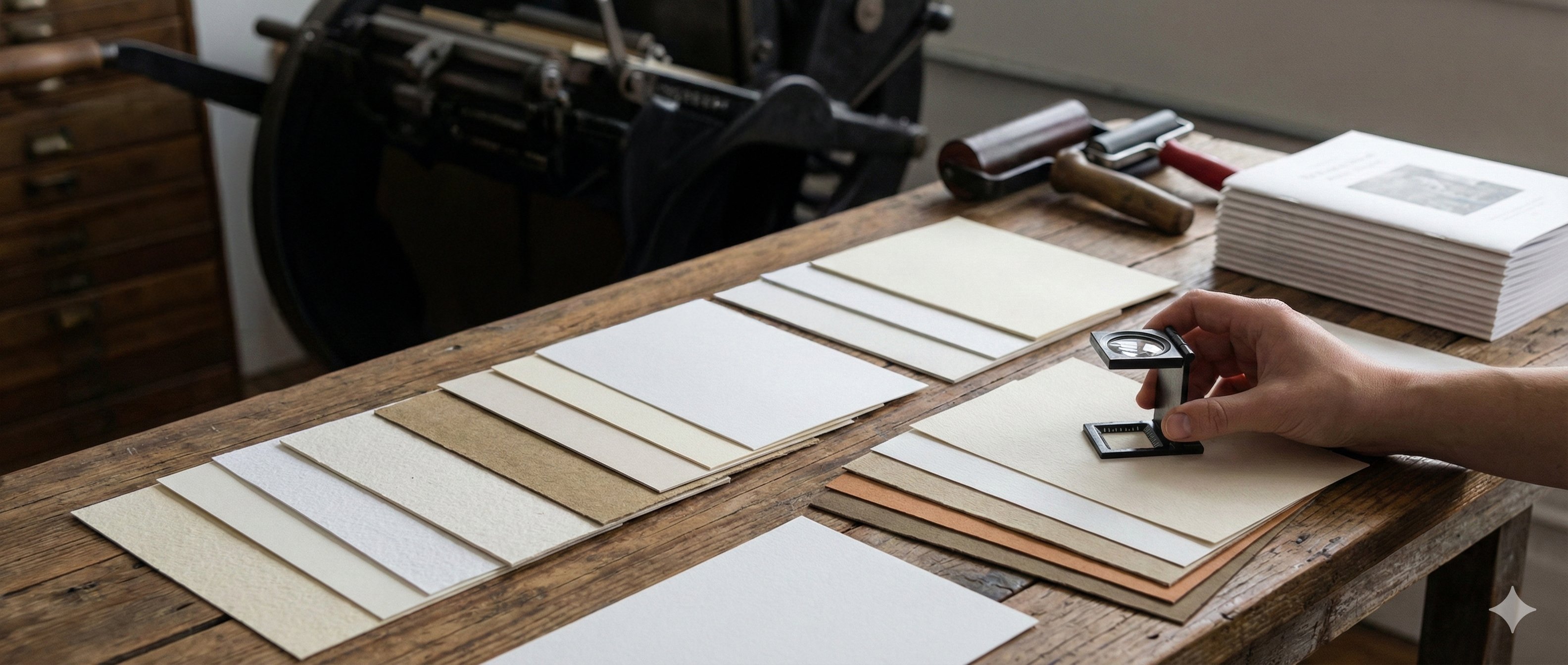
Pick Your Paper Type
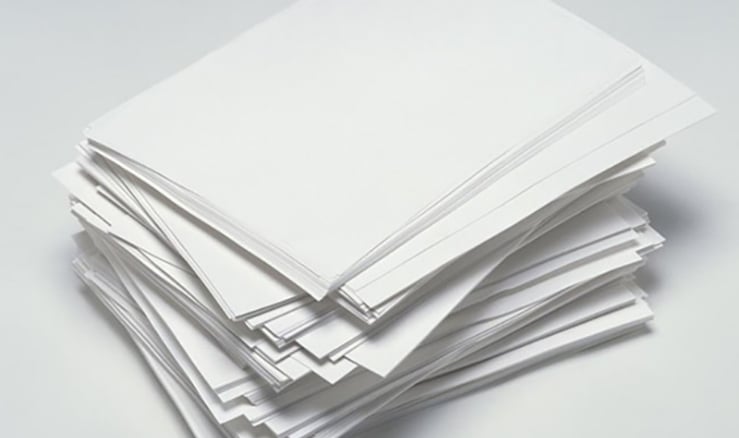
Standard Paper
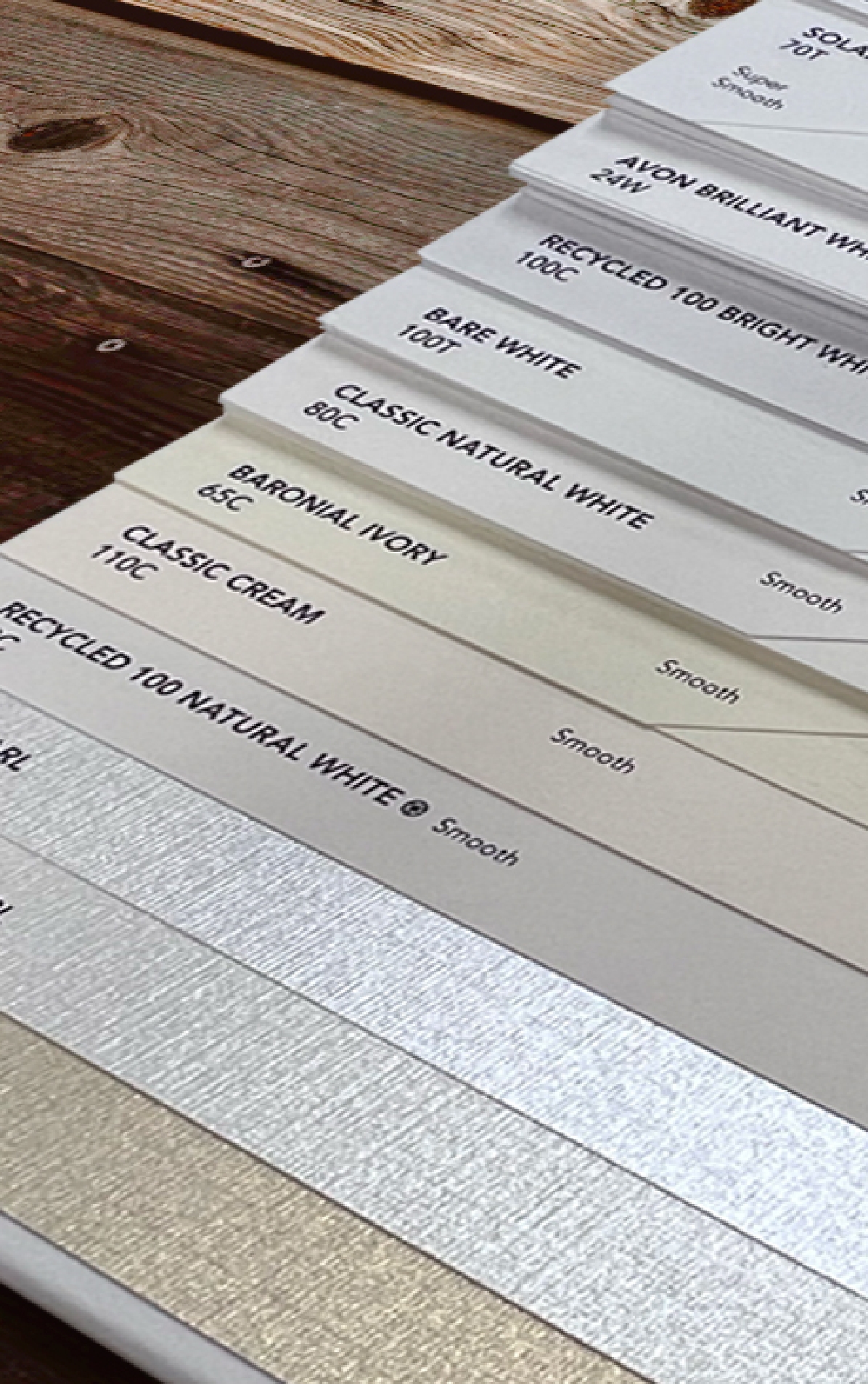
- Text paper: Smooth, flexible stock that works well for brochures, newsletters, and booklets, offering a refined feel without adding unnecessary bulk
- Cover paper: Thicker and more durable than text paper, giving your printed piece structure and presence.
These papers offer consistency, reliability, and an approachable price point. They’re best for communications that need to look clean and professional without the extra embellishments.
Specialty Paper
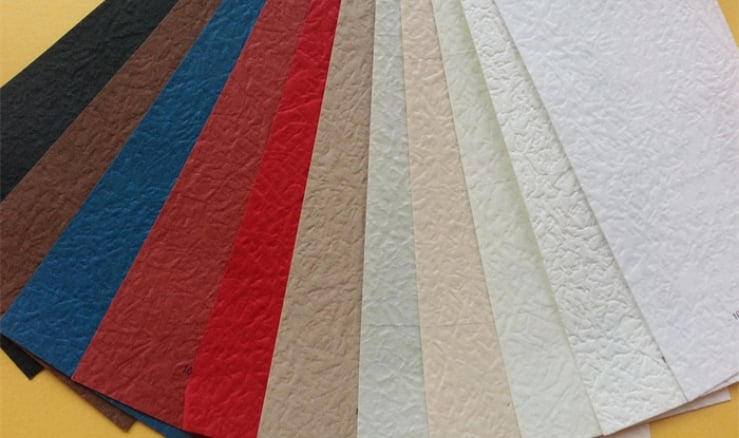
Specialty papers take your printed piece a step further by adding character, texture, and visual interest.
Recycled and FSC-certified options: Environmentally friendly papers that offer strong print performance while supporting brands focused on sustainability
- Pearlized stocks: Shimmering papers that add an elegant, eye‑catching sheen and work beautifully for invitations, luxury branding, or high‑end promotions
- Stipple textures: Subtly textured papers adding gentle dimension and making pieces feel more premium without overwhelming the design
- Linen, felt, cotton, or laid paper: Richly textured sheets that provide a classic, upscale feel perfect for certificates, donor communications, and formal invitations
- Synthetic/waterproof paper: Durable, tear‑resistant materials ideal for menus, outdoor signage, maps, and industrial applications where longevity is prioritized
- Kraft and colored stocks: Bold or rustic papers that help reinforce unique brand personalities and are commonly used in packaging, tags, and standout branded materials
Specialty papers offer opportunities to create tactile, memorable experiences that help your printed piece make an impression the moment someone picks it up.
Pick Your Paper Thickness & Weight
Heavier paper tends to feel more substantial and premium, while lighter papers are flexible, easy to fold, and ideal for multi-page documents.
For Text Pages
Text paper is lightweight, pliable, and ideal for projects that require smooth page-turning and easy folding. It’s sturdy enough to handle regular handling but light enough to keep booklets and multi-page pieces from feeling bulky:
- 60 lb. text paper: Budget-friendly flyers, inserts, and manuals
- 70 lb. text paper: A reliable choice for letters, newsletters, and standard booklet interiors
- 80 lb. text paper: A slightly heavier option that adds polish to brochures and self-mailers
- 100 lb. text paper: A premium choice for brochures, booklets, and marketing sheets where high print quality matters.
For Cover Pages
Cover paper is thicker and more durable than text paper, giving your printed piece structure and presence. It’s the stock you choose when you want something to feel substantial in someone’s hands:
- 80 lb. cover paper: A versatile option for booklet covers and lightweight postcards
- 100 lb. cover paper: A widely used choice for postcards, rack cards, and marketing pieces
- 110 lb. cover paper: A sturdier option that holds up well for folded cards or postcards that need extra rigidity
- 120 lb. cover paper: A premium-feeling stock that instantly conveys quality and durability
For Heavy or Premium Projects
Heavy and premium board stocks deliver maximum rigidity and an unmistakably substantial feel. They’re a go-to choice for premium cards, packaging, and any piece designed to stand out through its physical presence:
- 130 lb. cover paper: A durable option well suited for dimensional mailers and lightweight packaging
- 14 pt stock paper: A popular, widely used choice for high-end postcards and retail cards
- 16 pt stock paper: An ultra-thick, luxurious stock that offers unmatched rigidity for premium mailers and business cards
For Direct Mail
- Postcards: Often produced on 100 lb. cover, 110 lb. cover, 12 pt, or 14 pt stock, depending on the level of rigidity and budget
- Folded/dimensional mailers: Typically printed on 10–14 pt coated cover to strike a balance between durability and foldability
Pick Your Paper Finish
Coated Paper
Coated paper has a smooth surface that keeps ink from absorbing too deeply, resulting in crisp details and vibrant color. It’s a great fit when visuals matter.
There are several types of paper coats you can choose from:
- Gloss: Shiny, reflective finish that helps colors pop and brings photography to life.
- Silk/satin: Smooth, low‑glare finish striking a balance between sharp color and comfortable readability
- Dull: Soft, elegant finish that reduces shine and enhances readability while keeping images refined
Coated stocks are especially effective for marketing materials, product imagery, or anything designed to stand out visually.
Uncoated (Matte) Paper
Uncoated paper absorbs ink more readily, giving your printed piece a softer, more organic appearance. It feels natural to the touch and often conveys warmth, sincerity, or craftsmanship.
Because it handles handwriting beautifully, uncoated paper is widely used for letters, stationery, nonprofit appeals, reply cards, and forms
(*some people refer to uncoated paper as "matte" but real matte is a coating.)
Our General Recommendations
We're happy to print any style project, but here are our general recommendations if you're feeling overwhelmed.
| Project | Type & Weight | Finish |
|---|---|---|
| Brochures | 80-100# text | Any |
| Postcards | 100-130# cover or 9-14pt | Any |
| Letters | 60-70# text | Uncoated |
| Booklets | Cover: 80-100# cover Inside: 70-100# text |
Cover: Any Inside: Any |
| Invitations | 100-130# cover or 14pt | Uncoated |